Drain Cleaning
A slow drain is a warning.
Repairs
Leaks, dripping taps, running toilets, seized shut-offs and pressure that has quietly dropped off over the years. We find the actual cause, fix it properly, and tell you in plain language what went wrong.
Most plumbing calls start small. A tap that needs an extra half-turn, a patch of damp on a basement joist, a toilet that runs for a few seconds every hour. Left alone they get expensive — and the expensive part is rarely the plumbing. It's the floor, the ceiling and the cabinet underneath.
Older South Shore houses throw up their own problems: copper spliced into plastic spliced into galvanised, supply runs narrowed by decades of scale, and shut-off valves that haven't been turned since they were installed. That's the housing stock we work on every week, so we know where these things tend to fail before we open anything up.
Worth a call
The ones worth worrying about are the ones you can't. If your bill or meter says water is moving and nothing is running, call — that's a leak inside a wall, under a slab or below grade, and it doesn't improve on its own.
Repair or replace
Plenty of repairs are worth doing. A cartridge in a good-quality tap, a fill valve, a section of pipe — those are cheap fixes that buy years. Others are throwing money at something that's already at the end of its life.
You'll get told which one you're looking at, what a repair realistically buys you on a fixture of that age, and what a replacement costs. Then it's your call, not ours.
Recent work
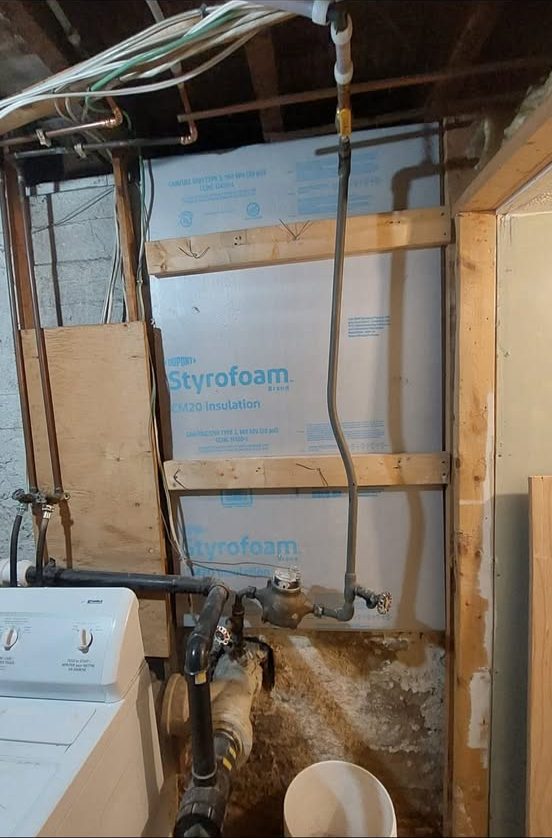
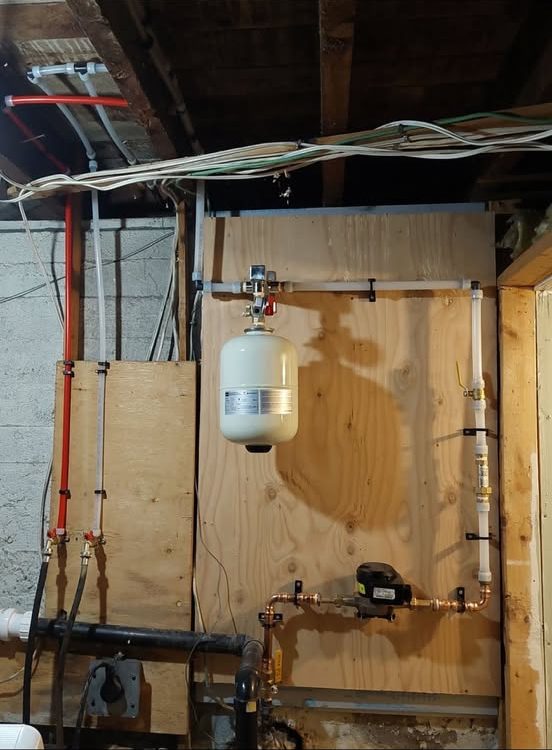
What a proper repair looks like when it's finished.
Common questions
Usually we can repair it, and where we can we will. Where we can't — a tap body that's pitted through, a toilet with a cracked tank, pipe that's failing in more than one place — we'll say so plainly and price both options so you can decide.
Whole-house pressure loss usually points at something shared: the main shut-off partly closed, a pressure-reducing valve that's failed, a clogged filter or screen, or on a well system a pump or pressure tank problem. It's worth a call rather than a guess — the fixes are very different.
If water is actively escaping, yes — close the main shut-off and open the lowest tap in the house to drain the pressure out of the system. If it's a slow drip into a bucket, leave it and we'll deal with it when we get there.
Yes. It's common in older Lunenburg County houses and it comes with its own habits — threads that seize, sections that crumble when disturbed, and internal scale that chokes flow long before anything leaks. We'll tell you honestly when patching it is a false economy.
Also from Dagley's
A slow drain is a warning.
No hot water is the call we get most.
Burst pipes, flooding, no heat in January, no hot water before work.
Call for anything urgent, or send the details and we'll get back to you to book a time that suits.